Android, Apple, Blog, Google, Instagram, iOS, News, Tech Talks

Instagram’s New “CLOSE FRIENDS” Feature is here

Ever wanted to send an Insta Story of your face-mask selfie (or drunk selfie on a bad Tinder date) to just your best friends instead of your entire Instagram following? Well, starting today, you can with Instagram’s newest feature: “Close Friends”.


“With Close Friends, you’ll have the flexibility to share your personal moments with exactly who you want — whether that’s inside jokes with your team or showing off your new relationship to your inner circle,” the company said.

To use the new feature, you first have to designate who you want in your Close Friends list. You have complete control over that list, since no one can request to be added.

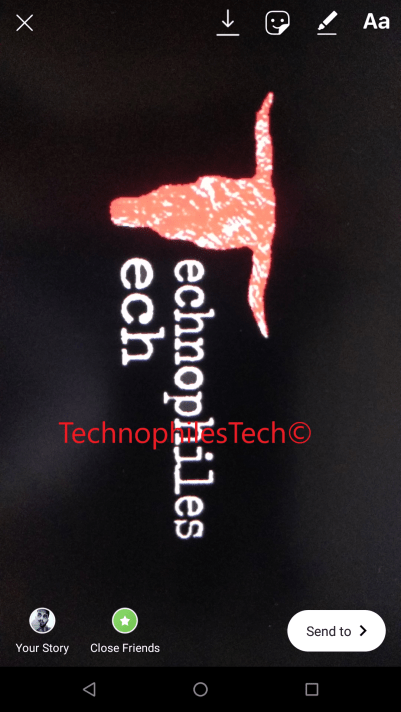
To use, open up the Stories camera and take a photo or video. After you finish your shot, you’ll notice a new green circle with a white star in it. Tap it, and you’ll be brought to the close friends list where you can add people to your inner circle. Instagram will suggest friends to you based on the people you interact with most, or you can use a search box to finish your list. In testing, people typically added around two dozen people, says Robby Stein, product lead at Instagram.

You can also edit the list from your profile page. The list lives in the right-hand panel of your profile, where you can find your Saved posts, Nametag, Your Activity. To access it, simply click on the green “Add” button next to your friend’s handle to include them on your list.

Screenshot_20181201-140602

Now when you go to post a Story, you’ll find a green-starred “Close Friends” button on the bottom left corner of your screen that you can press to send your personal content to your handpicked group — for the moments you want to share but not with your entire following (including you know, your mom’s friend from college or your aunt or your boss).

Screenshot_20181201-135450

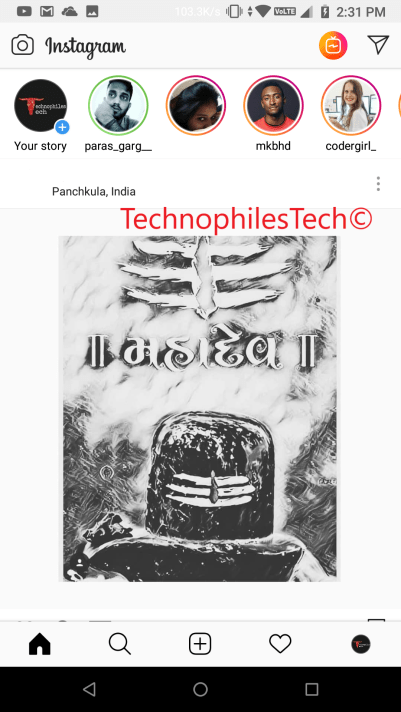
Once you do, your close friends will see a green ring around your story in the tray at the top of the feed. It’s a visual signal that a close friend has shared something more privately with you, and it should stand out from the standard pink-purple gradient rings.

Screenshot_20181201-143150

Friends are never notified that you added them to, or removed them from, your list. Unlike a Finstagram, people can’t request to join your circle of close friends. If they’re on your list, they’ll see the green rings when you post to your close friends; if they’re not, they won’t. But you’ll still maintain “plausible deniability,” Stein says, as most people will simply assume you haven’t posted anything to your close friends group.


Android, Blog, Google

Google has modified their OEM agreements to include provisions for regular security patches.

At the annual Google I/O developer conference, the company holds several sessions about updates to the Android platform. During the “What’s new in Android Security” talk, Google’s head of Android platform security David Kleidermacher talked about the upcoming security changes in the Android P release. Near the beginning of the talk, Mr. Kleidermacher discussed how the company was making it easier for OEMs to roll out security patches thanks to the architectural changes implemented with Project Treble. He followed this statement with a small, but incredibly important tidbit of information: Google has modified their OEM agreements to include provisions for regular security patches.

We’ve also worked on building security patching into our OEM agreements. Now this will really … lead to a massive increase in the number of devices and users receiving regular security patches.” – David Kleidermacher, Google’s head of Android platform security

Google releases monthly security patch bulletins that list patches for known vulnerabilities. These security patch bulletins are released to the public generally in the first week of each month, however, OEMs and vendors receive the monthly security patches a month in advance. This gives OEMs and vendor times to patch vulnerabilities before the security bulletin is made public; it’s how companies like Essential are able to provide security patch updates on the same day as Google.

Google hasn’t required OEMs to update their devices with the latest security patches, though generally, larger OEMs offer them for at least their flagship devices to assure customers that their devices are secure. A recent report revealed that some OEMs have missed patches from monthly Android security bulletins, and data shows that many devices fail to receive security patch updates in a timely manner. Google wants to change that.

The company has a few programs in place to bind their partners to certain terms. One of them is the GMS partner program, and another is the Android partner program. Companies in the latter program work closely with Google to make sure their devices are compliant with Google’s requirements for the latest version of Android. Android partners also receive new Android releases faster than other companies; it’s why companies like Xiaomi, Essential, and OnePlus received early access to the Android P Developer Preview 2 while other companies seemingly did not. Now it seems that Google is reworking the agreement with their Android partners to include terms requiring regular security patches.

Unfortunately, there are few details available about the updated Android partner agreement. We don’t know how often Google will require their OEM partners to implement patches. Google is likely requiring OEMs to roll out security patches on a monthly basis as Google doesn’t want Android devices to stay unpatched, but we aren’t sure about the timeline in the agreement. We also don’t know if Google has provisions in place to verify that security patches are being properly implemented. Still, the Android partner program is hugely beneficial for OEMs to be in, so it’s in their best interests to abide by the changes even if there may be some internal disagreements with the decision. Hopefully, as Mr. Kleidermacher stated, this change will make sure that millions more Android users are kept secure against the latest security threats.

Android, Blog

Redmi S2 Unveiled in China

Highlights:-

  • Redmi S2 Unveiled in China.
  • Powered by Snapdragon 625 SoC clocked at 2.0 GHz and Adreno 506 GPU.
  • 5.99″ HD+ Display.
  • Finger print sensor.
  • AI assisted 16MP Front Camera.
  • Dual Camera (12 MP + 5MP ) with EIS at back.

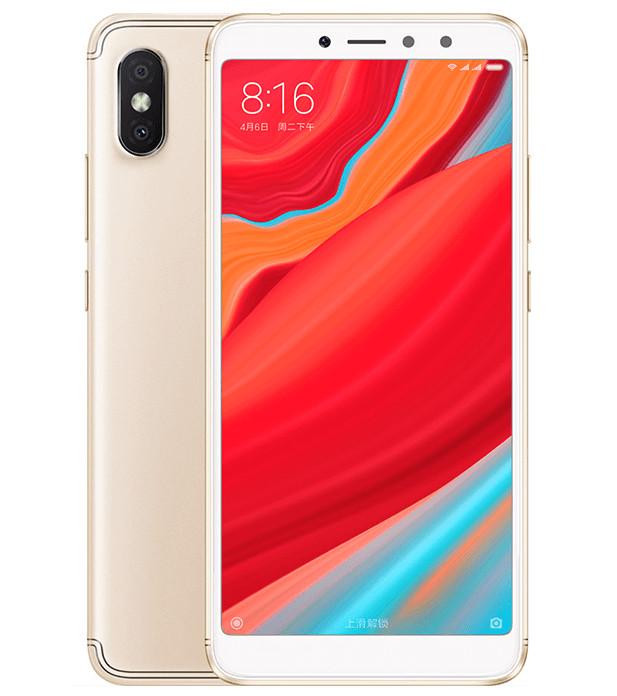
Today Xiaomi unveiled the Redmi S2 in China. The device is positioned below the Redmi Note 5 in its domestic market, although it kept some of the features like dual cameras and tall screen.

The Redmi S2 is powered by the Snapdragon 625 chipset and runs MIUI 9 over the latest available stable Android version – 8.1 Oreo. The SoC has an octa-core CPU, clocked at 2.0 GHz and Adreno 506 GPU.

The Xiaomi Redmi S2 sports a 5.99” screen with HD+ resolution. There are no buttons on the front – the fingerprint scanner is on the back, while the UI navigation is done via onscreen keys.


There is a 16-megapixel front camera with soft LED flash that supports AI beauty feature and uses pixel binning technology, combining the information from four pixels to create one large 2.0µm pixel. It also has face unlock. The rear setup is the same 12 MP + 5 MP combo with EIS that we saw on the Redmi Note 5 Pro.

The Xiaomi Redmi S2 comes in two versions – 3 GB RAM + 32 GB storage and 4 GB RAM + 64 GB storage – and they both come with a dedicated microSD card slot.

Xiaomi Redmi S2 specifications

  • 5.99-inch (1440 × 720 pixels) HD+ 18:9 2.5D curved glass display with 1000:1 contrast ratio, 450 nits (typ) Brightness, 70.8% NTSC color gamut.
  • 2GHz Octa-Core Snapdragon 625 14nm Mobile Platform with Adreno 506 GPU.
  • 3GB RAM with 32GB storage / 4GB RAM with 64GB storage, expandable memory up to 256GB with microSD.
  • Android 8.1 (Oreo) with MIUI 9.
  • Dual SIM (nano + nano + microSD).
  • 12MP rear camera with LED Flash, 1.25μm pixel size, PDAF, f/2.2 aperture, secondary 5MP camera.
  • 16MP front-facing camera with LED flash.
  • Fingerprint sensor, Infrared sensor.
  • Dimensions: 160.73 × 77.26 × 8.1mm; Weight: 170g
  • 4G VoLTE, Wi-Fi 802.11 a/b/g/n, Bluetooth 4.2, GPS + GLONASS.
  • 3080mAh (typical) / 3000mAh (minimum) battery.

The Xiaomi Redmi S2 comes in Rose gold, Champagne Gold and Platinum Silver colors, is priced at 999 yuan (US$ 156 / Rs. 10,560 approx.) for the 3GB RAM with 32GB storage version and the 4GB RAM with 64GB storage version costs 1299 yuan (US$ 204 / Rs. 13,735 approx.) .

Source

Android, Apple, Blog, Instagram, iOS, Tech Talks

Instagram’s ‘Active At’ Feature on Direct Messaging; Screenshot Alerts for Stories Also Coming Soon

Highlights:-

● Instagram added last seen feature in Direct Messaging (DM) Service

● Instagram testing text-only stories and screenshot alerts for stories

Instagram is now even more of a stalker’s paradise.

Everyone’s favorite photo and video sharing app has just added an “Activity Status” that lets all your friends and followers “see when you were last active” on the app, just like on Facebook Messenger.

When you open up Instagram Direct, the messaging section of the app, you’ll now see it shows whether your friends are “active” on the app or when they were last active on it.

Interestingly, the feature works even if the person is not following your account. The Activity Status will be shown to accounts you and anyone you message.

For Instagram stalkers — don’t pretend like you don’t do it — this is change that’ll let you keep even closer tabs on who is and isn’t ignoring you on the app.

Did your crush just read your DM (you’ll know because it says “seen” underneath the message) and not respond? Well, by default, you can now see if they’re really ghosting you or not. The new Activity Status is enough to give Instagram addicts even more anxiety .

So Instagram got its own version of “last seen” called “activity status”

Fortunately, there’s a way to stop this creepy activity broadcasting: Go Instagram’s app settings (the gear icon) inside of your profile, and then toggle off the “Show Activity Status.”

This slideshow requires JavaScript.

“When this is turned off, you won’t be able to see the activity status of other accounts.”

Apart from that, Facebook owned – Instagram is testing a new ‘Type’ feature that enables text-only, written stories on the mobile app. While Instagram Stories have always been based on images and video, Instagram has been testing the new Type feature that apparently shows up next to other choices such as Boomerang, Rewind, and Superzoom. Users can choose from different fonts, different backgrounds, and even apply filters on Type. Screenshots of some of the Fonts and Colors that I was able to use are attached here.👇

This slideshow requires JavaScript.

Another report from WABetaInfo suggests Instagram is testing out a security feature on its app. The feature will send notifications to users if someone takes a screenshot of their stories. Instagram currently notifies users of a screenshot only if the image or video is sent on Instagram Direct. Now, like Snapchat, the feature will be expanded to public stories as well.

As Instagram becomes ever more popular, it’s also becoming more and more like Facebook, and that’s, to be honest, kind of scary. The reason why Instagram was great was because it wasn’t Facebook. It didn’t have creepy activity status trackers.

But now that it does, it might be time to consider deleting Instagram off your phone, just like people are doing with the Facebook app.

Deleting Instagram is the new deleting Facebook!!!

If you like our post please share our post!!!

Follow us on Instagram

and Facebook

Air Pods, Apple, Blog, iOS, Science

The new iOS 10.3 is here


iOS 10.3 introduces new features including the ability to locate AirPods using Find my iPhone and more ways to use Siri with payment, ride booking and automaker apps.


Find My iPhone

  • View the current or last known location of your AirPods
  • Play a sound on one or both AirPods to help you find them


Siri

  • Support for paying and checking status of bills with payment apps
  • Support for scheduling with ride booking apps
  • Support for checking car fuel level, lock status, turning on lights and activating horn with automaker apps
  • Cricket sports scores and statistics for Indian Premier League (IPL)and International Cricket Council.

CarPlay

  • Shortcuts in the status bar for easy access to last used apps
  • Apple Music Now Playing screen gives access to Up Next and the currently playing song’s album
  • Daily curated playlists and new music categories in Apple Music


Other improvements and fixes

  • Rent once and watch your iTunes movies across your devices
  • New Settings unified view for your Apple ID account information, settings and devices
  • Hourly weather in Maps using 3D Touch on the displayed current temperature
  • Support for searching “parked car” in Maps
  • Calendar adds the ability to delete an unwanted invite and report it as junk
  • Home app support to trigger scenes using accessories with switches and buttons
  • Home app support for accessory battery level status
  • Podcasts support for 3D Touch and Today widget to access recently updated shows
  • Podcast shows or episodes are shareable to Messages with full playback support
  • Fixes an issue that could prevent Maps from displaying your current location after resetting Location & Privacy
  • VoiceOver stability improvements for Phone, Safari and Mail.
Blog, Tech Talks

Ransoc – An unusual ransomware that threatens to expose your personal information

MOSTLY a ransomware encrypts YOUR Files and demands money in exchange for a key that can decrypt the data. And the payment is demanded in Bitcoins. Ransoc is different in the way it works and the medium it uses for the payment.

How does Ransoc work?

Once your computer is infected by Ransoc, it gathers your personal information from your Skype and social media profiles and scans your system for Torrent files and other sensitive information. It then displays a ransom note. Interestingly, the ransom note is customized for a particular user and has their social media details including their profile picture. The ransom note threatens the victim with a fake legal proceeding and also that the ‘sensitive’ information found on their computer will be made public if the ransom is not paid.

Now, some mportantt points to note here:

  • Ransoc, unlike other ransomware, does not encrypt any files on the infected computer.
  • Reportedly, the ransom note is displayed only in a case where the ‘sensitive’ information found by the ransomware includes child pornography or illegally downloaded Torrent media files.

    So basically, the creators of this ransomware are targeting the victim’s fear of facing legal complications and losing their reputation instead of their data.

    Further, where all ransomware creators use Bitcoin to remain hidden from law enforcement, Ransoc asks its victims to pay via credit card; this kind of payment approach has been unheard of in ransomware attacks till now.

    How to stay safe from ransomware attacks

    • Never click on links or download attachments that arrive in emails from unwanted, unknown or unexpected sources.
    • Apply all recommended security updates (patches) to your Operating System, and programs like Adobe, Java, web browsers, etc.
    • Take regular backups of your files. Remember to disconnect the Internet when you are backing up on a hard drive. Unplug the drive before you go online again.
    • Avoid using outdated browser plugins or plugins that you do not use anymore.
    • Invest in an antivirus software that comes with several layers of security such as Web Security that blocks infected websites, Email Security that blocks infected emails, Phishing Protection that blocks fake websites, etc.
    • Always keep your antivirus software up-to-date to stay safe against new threats.
    Blog, Tech Talks

    Reliance Jio’s Happy New Year offer: Free services until March 31, 2017

    HIGHLIGHTS

    • Reliance Jio’s existing and new customers will have free service till March 31.
    • New users can avail of this free offer from December 4.
    • This new offer is being called the ‘Jio Happy New Year offer.’

    Existing and new Reliance Jio users will be able to use data, voice, video and all of Jio’s applications for free until March 31, 2017.

    All existing customers who already have free service until December 31, 2016, will see this deal extended to them from January 1 to March 31, 2017, and all new customers can avail of this deal from December 4, said Reliance Industrieschairman Mukesh Ambani in an announcement today.

    Reliance is calling this the ‘Jio Happy New Year’ offer.

    “In this period, customers will also be able to test-drive digital recharge, billing experience, using JioMoney wallet,” said Reliance Industries chairman Mukesh Ambani at an event today.

    Ambani said Jio has also “fine-tuned” its fair usage policy to ensure all users get fair share of network capacity.

    He added that since it Jio started operations, as many as 900 crore voice calls from Jio to the networks of its 3 largest competitors “were blocked.”

    Despite that, “in the first three months of its operation, Reliance Jio has grown faster than global tech giants Facebook, WhatsApp or Skype, ” said Ambani, in an address today.

    “In 83 days Jio has crossed 50 million customers…Jio is now the fastest growing tech firm,” Ambani said.

    He added that the benefits of Jio’s superior technology have been denied to customers “due to anti-competitive behaviour of incumbent operators.”

    Ambani also congratulated Prime Minister Narendra Modi for his “bold and historic decision” to ban high denomination currency.

    Blog, Science, Tech Talks

    Inside tiny tubes, water turns solid when it should be boiling

    ​MIT researchers discover astonishing behavior of water confined in carbon nanotubes.

    David L. Chandler | MIT News Office 

    A team at MIT has found an unexpected discovery about water: Inside the tiniest of the spaces – in carbon nanotubes whose inner dimensions are not much bigger than a few water molecules – water can freeze solid even at high temperatures that would normally set it boiling. The finding might lead to new  applications such as ice-filled wires.

     

                           (Credits :MIT)
    It’s a well-known fact that water, at sea level, starts to boil at a temperature of 212 degrees Fahrenheit, or 100 degrees Celsius. And scientists have long observed that when water is confined in very small spaces, its boiling and freezing points can change a bit, usually dropping by around 10 C or so.

    But now, a team at MIT has found a completely unexpected set of changes: Inside the tiniest of spaces — in carbon nanotubes whose inner dimensions are not much bigger than a few water molecules — water can freeze solid even at high temperatures that would normally set it boiling.

    The discovery illustrates how even very familiar materials can drastically change their behavior when trapped inside structures measured in nanometers, or billionths of a meter. And the finding might lead to new applications — such as, essentially, ice-filled wires — that take advantage of the unique electrical and thermal properties of ice while remaining stable at room temperature.

    The results are being reported today in the journal Nature Nanotechnology, in a paper by Michael Strano, the Carbon P. Dubbs Professor in Chemical Engineering at MIT; postdoc Kumar Agrawal; and three others.

    “If you confine a fluid to a nanocavity, you can actually distort its phase behavior,” Strano says, referring to how and when the substance changes between solid, liquid, and gas phases. Such effects were expected, but the enormous magnitude of the change, and its direction (raising rather than lowering the freezing point), were a complete surprise: In one of the team’s tests, the water solidified at a temperature of 105 C or more. (The exact temperature is hard to determine, but 105 C was considered the minimum value in this test; the actual temperature could have been as high as 151 C.)

    “The effect is much greater than anyone had anticipated,” Strano says.

    It turns out that the way water’s behavior changes inside the tiny carbon nanotubes — structures the shape of a soda straw, made entirely of carbon atoms but only a few nanometers in diameter — depends crucially on the exact diameter of the tubes. “These are really the smallest pipes you could think of,” Strano says. In the experiments, the nanotubes were left open at both ends, with reservoirs of water at each opening.

    Even the difference between nanotubes 1.05 nanometers and 1.06 nanometers across made a difference of tens of degrees in the apparent freezing point, the researchers found. Such extreme differences were completely unexpected. “All bets are off when you get really small,” Strano says. “It’s really an unexplored space.”

    In earlier efforts to understand how water and other fluids would behave when confined to such small spaces, “there were some simulations that showed really contradictory results,” he says. Part of the reason for that is many teams weren’t able to measure the exact sizes of their carbon nanotubes so precisely, not realizing that such small differences could produce such different outcomes.

    In fact, it’s surprising that water even enters into these tiny tubes in the first place, Strano says: Carbon nanotubes are thought to be hydrophobic, or water-repelling, so water molecules should have a hard time getting inside. The fact that they do gain entry remains a bit of a mystery, he says.

    Strano and his team used highly sensitive imaging systems, using a technique called vibrational spectroscopy, that could track the movement of water inside the nanotubes, thus making its behavior subject to detailed measurement for the first time.

    The team can detect not only the presence of water in the tube, but also its phase, he says: “We can tell if it’s vapor or liquid, and we can tell if it’s in a stiff phase.” While the water definitely goes into a solid phase, the team avoids calling it “ice” because that term implies a certain kind of crystalline structure, which they haven’t yet been able to show conclusively exists in these confined spaces. “It’s not necessarily ice, but it’s an ice-like phase,” Strano says.

    Because this solid water doesn’t melt until well above the normal boiling point of water, it should remain perfectly stable indefinitely under room-temperature conditions. That makes it potentially a useful material for a variety of possible applications, he says. For example, it should be possible to make “ice wires” that would be among the best carriers known for protons, because water conducts protons at least 10 times more readily than typical conductive materials. “This gives us very stable water wires, at room temperature,” he says.

    The research team also included MIT graduate students Steven Shimizu and Lee Drahushuk, and undergraduate Daniel Kilcoyne. The work was supported by the U.S. Army Research Laboratory and the U.S. Army Research Office through the MIT Institute for Soldier Nanotechnologies, and Shell-MIT Energy Initiative Energy Research Fund.
     “Reprinted with permission of MIT News”

    http://news.mit.edu/

    http://news.mit.edu/2016/carbon-nanotubes-water-solid-boiling-1128

    Blog, Science, Tech Talks

    Parallel Universes DO Exist And Are Already Reaching Out To Us, Scientists Confirm!

    In order to put forth tangible proof that backs the multiverse or ‘Many Worlds’ theory, scientists have finally confirmed that parallel universes exist and that they have already started interacting with ours. 

    Scientist Howard Wiseman of Griffith University, Australia, is spearheading a project that proposes a landmark theory suggesting that these parallel universes operate in the same time and space as our own. What’s even more interesting is that they are interacting with ours on a quantum level, as reported by IFL Science.

    The multiverse theory debunks the 20th-century single verse theory that suggested only one universe existed. However, the 'Many Worlds' theory proposes to explain the inexplicable aspects of quantum mechanics - a field of physics that deals with the structure and behaviour of matter as well as our physical world at the small scale of fundamental mechanics. 

    However, even the ‘Many Worlds’ theory doesn’t show the interaction between these universes. According to its traditional interpretation, several universes came to life after a celestial event occurred – like an asteroid hitting the Earth. 

    The alternative and a more believable theory is that of the ‘Many Interacting Worlds’ theory that suggests that these worlds not only overlap but constantly connect with one another in the same space and time.

    While some researchers think this is a ‘huge waste of time’, others have called it a ‘very nice analysis’. But if the ‘Many Interacting Worlds’ theory holds true, we are in for many worlds of surprise!