
Android, Apple, Blog, Google, Instagram, iOS, News, Tech Talks

Instagram’s New “CLOSE FRIENDS” Feature is here

Ever wanted to send an Insta Story of your face-mask selfie (or drunk selfie on a bad Tinder date) to just your best friends instead of your entire Instagram following? Well, starting today, you can with Instagram’s newest feature: “Close Friends”.


“With Close Friends, you’ll have the flexibility to share your personal moments with exactly who you want — whether that’s inside jokes with your team or showing off your new relationship to your inner circle,” the company said.

To use the new feature, you first have to designate who you want in your Close Friends list. You have complete control over that list, since no one can request to be added.

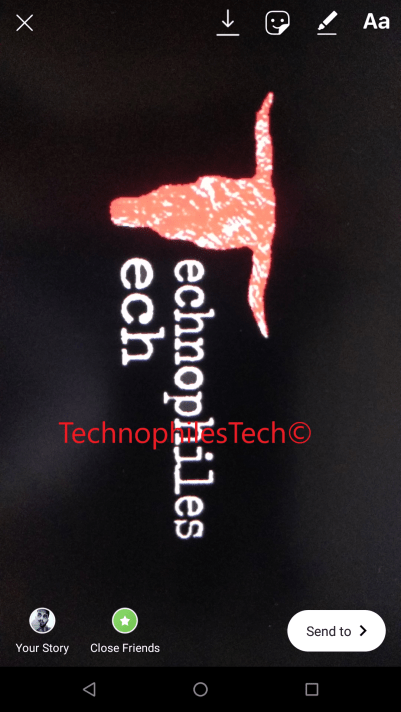
To use, open up the Stories camera and take a photo or video. After you finish your shot, you’ll notice a new green circle with a white star in it. Tap it, and you’ll be brought to the close friends list where you can add people to your inner circle. Instagram will suggest friends to you based on the people you interact with most, or you can use a search box to finish your list. In testing, people typically added around two dozen people, says Robby Stein, product lead at Instagram.

You can also edit the list from your profile page. The list lives in the right-hand panel of your profile, where you can find your Saved posts, Nametag, Your Activity. To access it, simply click on the green “Add” button next to your friend’s handle to include them on your list.

Screenshot_20181201-140602

Now when you go to post a Story, you’ll find a green-starred “Close Friends” button on the bottom left corner of your screen that you can press to send your personal content to your handpicked group — for the moments you want to share but not with your entire following (including you know, your mom’s friend from college or your aunt or your boss).
Screenshot_20181201-135450

Once you do, your close friends will see a green ring around your story in the tray at the top of the feed. It’s a visual signal that a close friend has shared something more privately with you, and it should stand out from the standard pink-purple gradient rings.

Screenshot_20181201-143150

Friends are never notified that you added them to, or removed them from, your list. Unlike a Finstagram, people can’t request to join your circle of close friends. If they’re on your list, they’ll see the green rings when you post to your close friends; if they’re not, they won’t. But you’ll still maintain “plausible deniability,” Stein says, as most people will simply assume you haven’t posted anything to your close friends group.

 

Android, Blog, Google

Google has modified their OEM agreements to include provisions for regular security patches.

At the annual Google I/O developer conference, the company holds several sessions about updates to the Android platform. During the “What’s new in Android Security” talk, Google’s head of Android platform security David Kleidermacher talked about the upcoming security changes in the Android P release. Near the beginning of the talk, Mr. Kleidermacher discussed how the company was making it easier for OEMs to roll out security patches thanks to the architectural changes implemented with Project Treble. He followed this statement with a small, but incredibly important tidbit of information: Google has modified their OEM agreements to include provisions for regular security patches.

We’ve also worked on building security patching into our OEM agreements. Now this will really … lead to a massive increase in the number of devices and users receiving regular security patches.” – David Kleidermacher, Google’s head of Android platform security

Google releases monthly security patch bulletins that list patches for known vulnerabilities. These security patch bulletins are released to the public generally in the first week of each month, however, OEMs and vendors receive the monthly security patches a month in advance. This gives OEMs and vendor times to patch vulnerabilities before the security bulletin is made public; it’s how companies like Essential are able to provide security patch updates on the same day as Google.

Google hasn’t required OEMs to update their devices with the latest security patches, though generally, larger OEMs offer them for at least their flagship devices to assure customers that their devices are secure. A recent report revealed that some OEMs have missed patches from monthly Android security bulletins, and data shows that many devices fail to receive security patch updates in a timely manner. Google wants to change that.

The company has a few programs in place to bind their partners to certain terms. One of them is the GMS partner program, and another is the Android partner program. Companies in the latter program work closely with Google to make sure their devices are compliant with Google’s requirements for the latest version of Android. Android partners also receive new Android releases faster than other companies; it’s why companies like Xiaomi, Essential, and OnePlus received early access to the Android P Developer Preview 2 while other companies seemingly did not. Now it seems that Google is reworking the agreement with their Android partners to include terms requiring regular security patches.

Unfortunately, there are few details available about the updated Android partner agreement. We don’t know how often Google will require their OEM partners to implement patches. Google is likely requiring OEMs to roll out security patches on a monthly basis as Google doesn’t want Android devices to stay unpatched, but we aren’t sure about the timeline in the agreement. We also don’t know if Google has provisions in place to verify that security patches are being properly implemented. Still, the Android partner program is hugely beneficial for OEMs to be in, so it’s in their best interests to abide by the changes even if there may be some internal disagreements with the decision. Hopefully, as Mr. Kleidermacher stated, this change will make sure that millions more Android users are kept secure against the latest security threats.